
May be a dumb question, but can I sync a couple t6s with a pair of avengers? Trying to avoid getting rid of the t6s for ions. Thanks again all!
You are using an out of date browser. It may not display this or other websites correctly.
You should upgrade or use an alternative browser.
You should upgrade or use an alternative browser.
Feniex sync w/ Whelen?
- Thread starter Mbemt
- Start date
Mbemt said:May be a dumb question, but can I sync a couple t6s with a pair of avengers? Trying to avoid getting rid of the t6s for ions. Thanks again all!
I don't know of ANY different manufacturer products that will sync with eachother without an external flasher. The short answer is no. The long answer is, using an external flasher and setting everything to steady burn, you can achieve sync.

I tired to sync 2 par 36 style lights and tir 3 didint work. then i got a flasher thing and it works!

The standard answer is no.
But really, there's no reason why different brands can't sync, IF they're using the same voltage and polarity for the sync signal. Without knowing those details, I wouldn't recommend random experimentation.
It could be a useful group project to determine how different lights do their sync thing. For starters, Star Signal "S-LINK" uses a +5V pulse.
Or am I the only one geeky enough to think this is remotely interesting?
But really, there's no reason why different brands can't sync, IF they're using the same voltage and polarity for the sync signal. Without knowing those details, I wouldn't recommend random experimentation.
It could be a useful group project to determine how different lights do their sync thing. For starters, Star Signal "S-LINK" uses a +5V pulse.
Or am I the only one geeky enough to think this is remotely interesting?
MtnMan said:The standard answer is no.
But really, there's no reason why different brands can't sync, IF they're using the same voltage and polarity for the sync signal. Without knowing those details, I wouldn't recommend random experimentation.
It could be a useful group project to determine how different lights do their sync thing. For starters, Star Signal "S-LINK" uses a +5V pulse.
Or am I the only one geeky enough to think this is remotely interesting?
You're geeky, but I'm interested too. I know Feniex products use the same wire for both pattern and sync. To change pattern, you tap the wire to ground. not sure if sync is a ground or positive signal.

MtnMan said:The standard answer is no.
But really, there's no reason why different brands can't sync, IF they're using the same voltage and polarity for the sync signal. Without knowing those details, I wouldn't recommend random experimentation.
It could be a useful group project to determine how different lights do their sync thing. For starters, Star Signal "S-LINK" uses a +5V pulse.
Or am I the only one geeky enough to think this is remotely interesting?
Of course it's interesting. Everyone get a multi-meter and what ever you have in the way of synchable LEDs.

foxtrot5 said:I don't know of ANY different manufacturer products that will sync with eachother without an external flasher.
AWL lights sync with one of the major manufacturer's lights

---
OP, Feniex products will not sync with Whelen products.
JohnMarcson said:Of course it's interesting. Everyone get a multi-meter and what ever you have in the way of synchable LEDs.
You really need a scope to be sure what's going on. On the Star I tested, the sync pulse is 0.25 milliseconds. A meter just reads 0V.
Tom said:AWL lights sync with one of the major manufacturer's lights
Whose name rhymes with...?
MtnMan said:You really need a scope to be sure what's going on. On the Star I tested, the sync pulse is 0.25 milliseconds. A meter just reads 0V.
The one I just tested read 4.5v
uhhh, i may or may not have killed my multi-meter the other night. exhaustion and electronics don't mix.
Last thought, what would you guys replace. Looking to do an x pattern with two lights in the lower left and right windshield area(currently two single avengers) with the two lights on the grill(two t6s) if that makes sense. Drop the t6 for Ion. Or drop avengers for feniex Apollo? Or maybe cobra. :undecided: Like the idea of linear in the windshield tho.
So does anyone have a list of different brands that will sync together?? I have a feeling its not many seeing that both the sync has to be the same along with the flash pattern has to be the same.
fordtruck661 said:So does anyone have a list of different brands that will sync together?? I have a feeling its not many seeing that both the sync has to be the same along with the flash pattern has to be the same.
Flash patterns don't have to be identical, as long as they're about the same duration.
Cool, and that being 5 amp output. Everything will get powered correctly etc.?foxtrot5 said:
Mbemt said:Cool, and that being 5 amp output. Everything will get powered correctly etc.?
Oh yeah, two dual avengers and two T-6s will be fine. IIRC it's 5 amps PER channel so a total of 20 amps. You could put each light on it's own channel to get some pretty cool flash patterns out of em.
It also comes with insulated connectors for those posts so you don't have to go out and buy em.

MtnMan said:The standard answer is no.
But really, there's no reason why different brands can't sync, IF they're using the same voltage and polarity for the sync signal. Without knowing those details, I wouldn't recommend random experimentation.
It could be a useful group project to determine how different lights do their sync thing. For starters, Star Signal "S-LINK" uses a +5V pulse.
Or am I the only one geeky enough to think this is remotely interesting?
I think its a brilliant idea to scope out all these sync wires. It'd be really cool if someone on here with an oscilloscope happened to live near sirennet or one of the other larger places that kept multiple brands in stock. I bet we would find more combinations of syncable brands. It would also be possible to rig up a microprocessor board to "convert" one systems sync to another. Wink wink. Imagine a $30 box that would let you sync different brands lights. Would probably cost $2-5 a piece if made in bulk. It's just a matter of mapping out each brands pulse voltage, duration, and delay between.
minig0d said:I think its a brilliant idea to scope out all these sync wires. It'd be really cool if someone on here with an oscilloscope happened to live near sirennet or one of the other larger places that kept multiple brands in stock. I bet we would find more combinations of syncable brands. It would also be possible to rig up a microprocessor board to "convert" one systems sync to another. Wink wink. Imagine a $30 box that would let you sync different brands lights. Would probably cost $2-5 a piece if made in bulk. It's just a matter of mapping out each brands pulse voltage, duration, and delay between.
Someone find me an oscilloscope (whatever that is
 ) and I'll give it a shot!
foxtrot5 said:Someone find me an oscilloscope (whatever that is
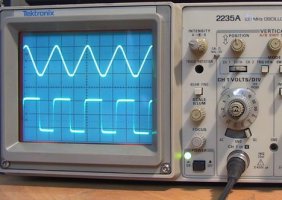
Lol they look like this. Not exactly for amateurs like a digital multimeter. But where a multimeter can only read voltages. These can read the entire "pulse" in terms of voltage, width, etc characteristics. Sync between lights is very simple in that a specific "pulse" is sent down the wire so the other light knows when to light up. But each manufacturer uses a different voltage. As some people were mentioning 4.5-5v. But digital multimeters actually measure average voltages over a period of time. So you don't know if it was a 4.5v for 500 ms or a 12v for 50ms and that it was just the best the meter could get a read on. An oscilloscope shows the entire wave on the screen. Above my skill level for sure. But someone who knows what they are doing could record the info very easily.
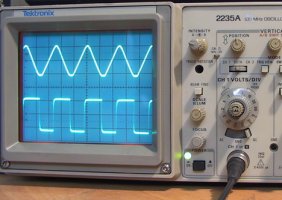

The best tool ever.foxtrot5 said:Someone find me an oscilloscope (whatever that is
MtnMan said:Star Signal "S-LINK" uses a +5V pulse.
Just checked a Whelen [correction] LIN4: sync floats at +12V, drops low (+0.4V) during the first half of the pattern.
Last edited by a moderator:
MtnMan said:Just checked a Whelen TIR4: sync floats at +12V, drops low (+0.4V) during the first half of the pattern.
Could you look again? Whelen doesn't make a TIR4.

minig0d said:Lol they look like this. Not exactly for amateurs like a digital multimeter. But where a multimeter can only read voltages. These can read the entire "pulse" in terms of voltage, width, etc characteristics. Sync between lights is very simple in that a specific "pulse" is sent down the wire so the other light knows when to light up. But each manufacturer uses a different voltage. As some people were mentioning 4.5-5v. But digital multimeters actually measure average voltages over a period of time. So you don't know if it was a 4.5v for 500 ms or a 12v for 50ms and that it was just the best the meter could get a read on. An oscilloscope shows the entire wave on the screen. Above my skill level for sure. But someone who knows what they are doing could record the info very easily.
Not only do voltages vary, but so do pulse types (some are analog, others are digital) and polarities, which means that even if voltages/impedance are the same, the pulse type, length, or polarity may not even be close (some use negative polarities, while others use positive). I've even seen some documentation to suggest that some manufacturers even use a DC bias for their sync circuits (which would explain why putting positive current or a ground to the sync wire can potentially fry your lighthead).
One thing I know about Whelen's sync signal is that it's definitely digital, as each head has to determine which of the heads being synced is the "master", and the rest are "slaves", utilizing the same signal on one head (at least this is what I've been told). My guess is it's a timing issue, and once one head takes over, the rest fall in line behind it.
factorone33 said:Not only do voltages vary, but so do pulse types (some are analog, others are digital) and polarities, which means that even if voltages/impedance are the same, the pulse type, length, or polarity may not even be close (some use negative polarities, while others use positive). I've even seen some documentation to suggest that some manufacturers even use a DC bias for their sync circuits (which would explain why putting positive current or a ground to the sync wire can potentially fry your lighthead).
One thing I know about Whelen's sync signal is that it's definitely digital, as each head has to determine which of the heads being synced is the "master", and the rest are "slaves", utilizing the same signal on one head (at least this is what I've been told). My guess is it's a timing issue, and once one head takes over, the rest fall in line behind it.
Seems overly complicated. I would assume that they just operate on 2 stages of timing. Masters blink on stage 1 and slaves on stage 2. Whether it be masters flash on the pulse and slaves off or masters flash on the first pulse slaves on the second. Electrically those would be easiest to implement. But yeah, I'm sure some are negative and some are positive triggered. Wonder how much tolerance they have. It may not be easy to make a circuit to sync just about any light. But I'd assume it'd be pretty easy to sync 75% of the syncable lights on the market. Some may use some super complicated bias system. But KISS principle. More complicated it is the less fault tolerant and the more likely it is for something to go wrong.
JohnMarcson said:Can one of our resident overseas reverse engineers weigh in here? Time to earn your keep.
Overseas doesn't like innovation, they just like copying existing designs... now it'd be pretty cool to see a module come out from someone like Feniex, or a startup company!

minig0d said:Overseas doesn't like innovation, they just like copying existing designs... now it'd be pretty cool to see a module come out from someone like Feniex, or a startup company!
A Sync-Master module (dibs on the TM) is technically feasible, but I think it would be a tough sell. The way I thought of implementing it would require separate wiring for each "flavor" of sync signal, at which point most people would just use a central flasher. All input/outputs would have to be protected so it won't go poof when Crimp Sparkenmacher attempts trial-n-error installation. And the thought of end-user support gives me a headache.
But hey, if anyone wants to throw wads of development capital at me....
MtnMan said:A Sync-Master module (dibs on the TM) is technically feasible, but I think it would be a tough sell. The way I thought of implementing it would require separate wiring for each "flavor" of sync signal, at which point most people would just use a central flasher. All input/outputs would have to be protected so it won't go poof when Crimp Sparkenmacher attempts trial-n-error installation. And the thought of end-user support gives me a headache.
But hey, if anyone wants to throw wads of development capital at me....
good point... how bout just figure out 2 or 3 of the bigger names.... like a sync whelen and Federal signal... or whelen and feniex... etc... that way they wouldn't be guessing at wires =]
also one problem with the central flashers is if you have say two red/blue dual avengers... can't flash em except simultaneously as you have to set em on steady burn.... connecting sync wires would allow you to sync dual colored dual light heads of different brands
minig0d said:Overseas doesn't like innovation, they just like copying existing designs... now it'd be pretty cool to see a module come out from someone like Feniex, or a startup company!
What I meant was they probably have the data on how the other companies do it...
JohnMarcson said:What I meant was they probably have the data on how the other companies do it...
haha you're right about that I'm sure.... haha come to think of it... that brings up another question... I'm sure most of those knock off lights have cigarette lighter plugs... but, I wonder IF any of those knock offs do have sync wires, do they actually sync with the brand name lights or no?
minig0d said:haha you're right about that I'm sure.... haha come to think of it... that brings up another question... I'm sure most of those knock off lights have cigarette lighter plugs... but, I wonder IF any of those knock offs do have sync wires, do they actually sync with the brand name lights or no?
I know that when reverse engineering some interior bars a few years ago a larger overseas company identified a few features that they decided were too expensive/complicated to copy exactly or at all. Many times the time is spent making the item look alike, not function alike. That said, when I got a massive batch of overseas stuff sent to me last year, a few of the lights synched with either federal or code 3 oddly enough, because the light looked whelen-ish.
But even if they don't synch with them, the overseas guys would know how the US guys stuff works.
JohnMarcson said:I know that when reverse engineering some interior bars a few years ago a larger overseas company identified a few features that they decided were too expensive/complicated to copy exactly or at all. Many times the time is spent making the item look alike, not function alike. That said, when I got a massive batch of overseas stuff sent to me last year, a few of the lights synched with either federal or code 3 oddly enough, because the light looked whelen-ish.
But even if they don't synch with them, the overseas guys would know how the US guys stuff works.
Oh ya I agree with your knowing how they worked. I'm just ADD so my mind wandered onto related other things lol
foxtrot5 said:I laughed so hard, I almost peed...
LMAO IDK how I missed that when I originally read it... sounds like that guy with the matte black p71 out of his mom's garage... blanking on what his name was...